


Beyond the Skyscrapers: 10 Historical Landmarks to Discover in Hong Kong

While Hong Kong is famous for its gleaming skyscrapers and world-class shopping, there is a whole other side to the city that often gets overlooked. If you scratch the surface, you’ll find a fascinating blend of British colonial heritage and ancient Chinese traditions tucked away in the busy streets.
If you're planning a trip to the "Pearl of the Orient," here are 10 must-visit historical landmarks that tell the real story of Hong Kong.
1. The Peak Tram & Victoria Peak
You can't really say you've been to Hong Kong without a trip to The Peak. Since 1888, the Peak Tram has been hauling passengers up the steep slopes of Mount Austin. Back in the colonial days, it was the only way for the British elite to reach their summer homes and escape the heat. Today, it’s one of the oldest funicular railways in the world and still offers the absolute best view of the skyline.
2. Man Mo Temple (Hollywood Road)
Stepping into Man Mo Temple is like stepping back in time. Built around 1847, it’s one of Hong Kong’s oldest and most significant temples. Dedicated to the gods of Literature and War, the air inside is thick with the scent of massive incense coils hanging from the ceiling. It’s a peaceful, moody escape from the chaos of Central.
3. Tsim Sha Tsui Clock Tower
Standing tall on the Kowloon waterfront, this 44-metre red-brick tower is a lonely remnant of the old Kowloon-Canton Railway station. Built in 1915, it served as the gateway for millions of people arriving in Hong Kong by train. It’s a Grade I monument and a perfect spot for a photo before catching the Star Ferry.
4. Tai Kwun (Old Central Police Station)
Tai Kwun is a brilliant example of heritage conservation. This massive complex once housed the Central Police Station, the Central Magistracy, and Victoria Prison. It’s been beautifully restored into an arts and culture hub where you can wander through old prison cells and grand colonial courtyards. It’s easily one of the coolest spots in the city right now.
5. The Blue House (Wan Chai)
You’ll spot this one from a mile away! The Blue House is a four-storey tenement building (called a tong lau) built in the 1920s. It’s unique because it was saved from demolition and restored while keeping its original residents inside. It represents the "grassroots" history of Hong Kong and won a UNESCO award for its community-first approach.
6. 1881 Heritage
Formerly the Marine Police Headquarters, this site in Tsim Sha Tsui dates back to 1884. It’s a stunning piece of Victorian-era architecture that has been converted into a luxury shopping and hotel complex. Make sure to check out the "Time Ball Tower"—it was used to help ships in Victoria Harbour calibrate their chronometers!
7. St. John's Cathedral
Tucked away among the massive bank towers of Central is St. John’s Cathedral, the oldest Anglican church in the Far East. Completed in 1849, it survived the Japanese occupation during WWII (when it was briefly used as a clubhouse). It’s a beautiful, quiet spot with classic Gothic architecture that feels worlds away from the nearby stock exchange.
8. Western Market
Located in Sheung Wan, the Western Market is the oldest surviving market building in Hong Kong. Built in 1906, it features an Edwardian-style red-brick exterior. Inside, you'll find everything from traditional fabric shops to quirky dessert cafes. It’s a great place to pick up a unique souvenir that isn't a plastic fridge magnet.
9. Murray House
This one has a bit of a "travelling" history. Murray House was originally built in 1844 in Central as officers' quarters. In the 1980s, the entire building was dismantled—stone by stone—and eventually moved and rebuilt in Stanley on the south side of the island. It’s now home to restaurants and shops with a great view of the ocean.
10. Chi Lin Nunnery
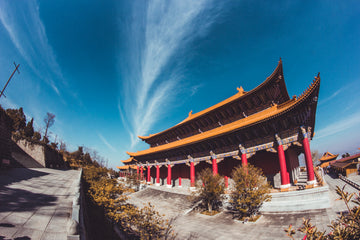
While it was rebuilt in the 1990s, the Chi Lin Nunnery is designed in the traditional Tang Dynasty style. What makes it incredible is that the entire wooden structure was built using ancient interlocking techniques—not a single iron nail was used. Combined with the nearby Nan Lian Garden, it’s a masterclass in ancient architectural history.


